
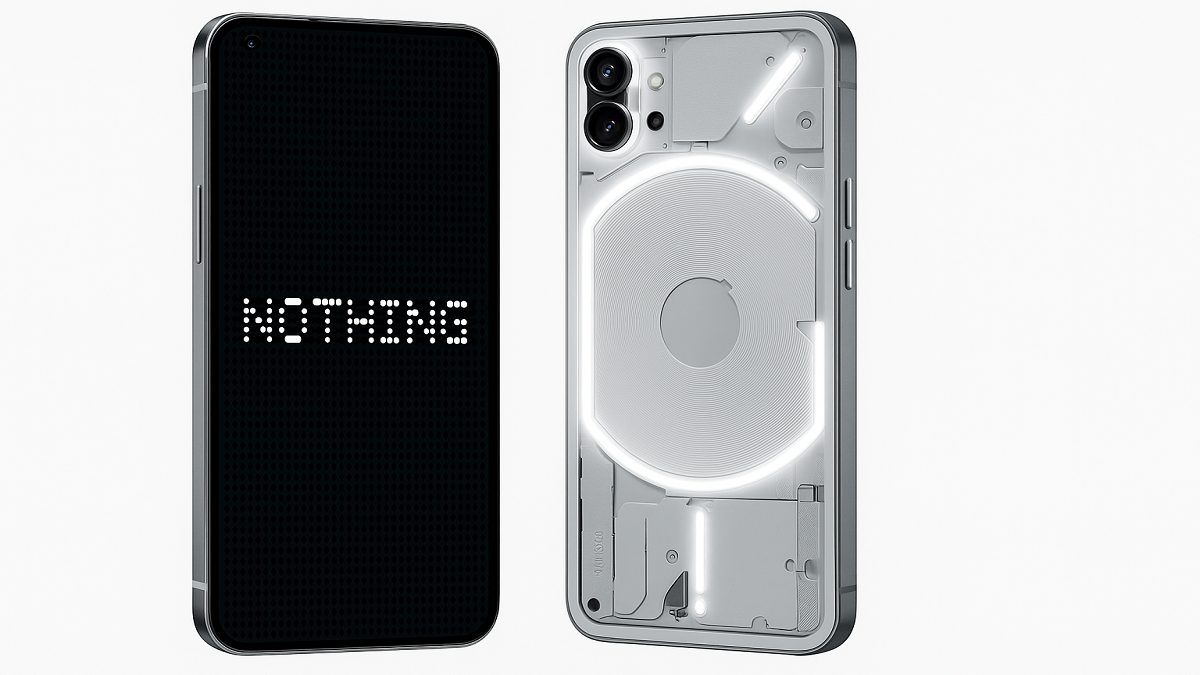
Nothing Phone 3 Camera Specifications: Triple 50MP Lenses Explained in Detail
The Nothing Phone 3 features a triple rear camera system, all at 50 MP: a main wide lens with f/1.7 aperture, 24 mm equivalent, PDAF & OIS, and a 1/1.3-inch sensor size; an ultra-wide lens with f/2.2 aperture covering ~114° field of view; and a periscope telephoto camera with f/2.7 aperture, 3× optical zoom, plus OIS + PDAF. Rear video recording supports 4K at 60 fps and 1080p at 60 fps. On the front is also a 50 MP wide-angle selfie camera, capable of 4K @ 60 fps and 1080p @ 60 fps with HDR. Features like LED flash, gyro-EIS, panorama, HDR are included.
Triple Camera Setup The Selfie Camera Video Capabilities Low Light Performance Ultra Wide Freedom Faqs
Triple Rear Camera Setup
Smartphone cameras often put all the pressure on a single main sensor, leaving the rest as secondary players. The Nothing Phone 3 breaks this tradition with three equally strong 50 MP cameras. Whether you’re going wide, ultra-wide, or zooming in, every lens brings top-tier performance.
-
Main / Wide Camera: 50 MP, f/1.7, 24 mm, PDAF, OIS, 1/1.3-inch sensor
-
Ultrawide Camera: 50 MP, f/2.2, ~114° FoV
-
Telephoto / Periscope Camera: 50 MP, f/2.7, 3× optical zoom, OIS + PDAF
The Selfie Camera
Selfies are no longer just quick snaps—they’re content. That’s why the Nothing Phone 3 puts a full 50 MP sensor on the front, giving your selfies, vlogs, and video calls the same quality as the rear setup. And yes, it records in 4K @ 60 fps, complete with HDR for vivid results.
-
Front Camera: 50 MP wide-angle lens
-
Video Recording: 4K @ 60 fps, 1080p @ 60 fps with HDR
Video Recording Capabilities
Videos are where shaky hands often ruin the moment. But with Optical Image Stabilization (OIS) and balanced support across all cameras, the Phone 3 delivers cinematic smoothness. Both front and rear lenses can shoot at 4K @ 60 fps, giving creators freedom without compromise.
-
Rear Video: 4K @ 60 fps, 1080p @ 60 fps
-
Front Video: 4K @ 60 fps, 1080p @ 60 fps with HDR
Nothing Phone 2a: Full Specifications
Low Light Performance
Capturing the night is tough, but Nothing arms you with the right tools. The main wide camera has a large 1/1.3-inch sensor and a bright f/1.7 aperture, letting more light in when it matters. Add OIS, and even handheld low-light shots look stable and sharp.
-
Main Camera: f/1.7 + 1/1.3-inch sensor + OIS
-
Other Lenses: Also supported with stabilization
Ultra Wide Freedom
Sometimes you need more in your frame—whether it’s a city skyline or a group of friends. The Nothing Phone 3’s 50 MP ultra-wide lens with 114° FoV makes it possible without losing detail. Big shots stay crisp, colorful, and creative.
-
Ultra-Wide Camera: 50 MP, f/2.2, 114° FoV
Telephoto Strength
Getting closer without moving closer is where zoom shines. The Nothing Phone 3’s 50 MP telephoto lens with 3× optical zoom ensures you capture faraway subjects without pixelation. With OIS and PDAF, even zoomed-in moments look clear.
-
Telephoto Camera: 50 MP, f/2.7, 3× optical zoom, OIS + PDAF
Balanced System
Most phones downgrade secondary lenses, but here every sensor is a star. With 50 MP across all four cameras (rear triple + front), the Nothing Phone 3 guarantees consistency. No matter the perspective, quality remains top-class.
-
All Lenses: 50 MP each
-
Setup: Wide, Ultra-Wide, Telephoto, and Front
Final Thoughts
The Nothing Phone 3 isn’t just about design—it’s about trustworthy, balanced photography. From low-light night shots to 4K selfie videos, and from ultra-wide landscapes to zoomed-in telephoto captures, it gives users professional-grade control at every angle. This is a phone where every lens matters.
Nothing 3a Pro Full Specifications
Camera FAQs on Nothing Phone 3
Triple Rear Cameras
Q1. How many rear cameras does the Nothing Phone 3 have?
It has three rear cameras, each with 50 MP resolution.
Q2. Does the main rear camera have OIS?
Yes, the main 50 MP wide camera includes Optical Image Stabilization.
Q3. What is the zoom capability of the telephoto lens?
The telephoto/periscope lens supports 3× optical zoom with OIS and PDAF.
Selfie Camera
Q4. How many megapixels is the Nothing Phone 3 selfie camera?
The front camera is a 50 MP wide-angle lens.
Q5. Can the front camera record 4K video?
Yes, it records 4K @ 60 fps and also 1080p @ 60 fps with HDR.
Q6. Does the selfie camera support HDR?
Yes, HDR is supported for sharper highlights and better contrast.
Video Recording
Q7. Can the Nothing Phone 3 record 4K videos?
Yes, both the front and rear cameras record 4K @ 60 fps.
Q8. Does the phone have video stabilization?
Yes, the cameras support Optical Image Stabilization for steady footage.
Q9. Is HDR video supported on the selfie camera?
Yes, HDR is supported for 1080p video recording on the front camera.
Low-Light Performance
Q10. Does the Nothing Phone 3 have a night mode?
While specs confirm strong hardware (f/1.7 aperture, OIS), the phone also supports night photography modes.
Q11. Which camera is best for low-light shots?
The 50 MP main wide camera with f/1.7 aperture and 1/1.3-inch sensor is designed for low light.
Q12. Does OIS help in night photography?
Yes, Optical Image Stabilization reduces blur and improves clarity in low light.
Ultra-Wide Camera
Q13. How wide is the ultra-wide lens on the Phone 3?
It covers about 114° field of view.
Q14. How many megapixels is the ultra-wide camera?
The ultra-wide lens is 50 MP.
Q15. Is the ultra-wide camera good for group photos?
Yes, its wide field of view makes it perfect for group shots and landscapes.
Telephoto Camera
Q16. What is the optical zoom level of the telephoto lens?
It offers 3× optical zoom.
Q17. Does the telephoto camera have stabilization?
Yes, it supports OIS + PDAF.
Q18. How many megapixels is the telephoto lens?
The telephoto/periscope camera is 50 MP.
Balanced Camera System
Q19. Are all Nothing Phone 3 cameras 50 MP?
Yes, all three rear cameras and the front camera are 50 MP each.
Q20. Is there a compromise on secondary lenses?
No, every lens—wide, ultra-wide, telephoto, and front—carries flagship specs.
Q21. Who benefits most from this setup?
Content creators, vloggers, travelers, and casual users who need consistent performance across all lenses.
External Resources: