
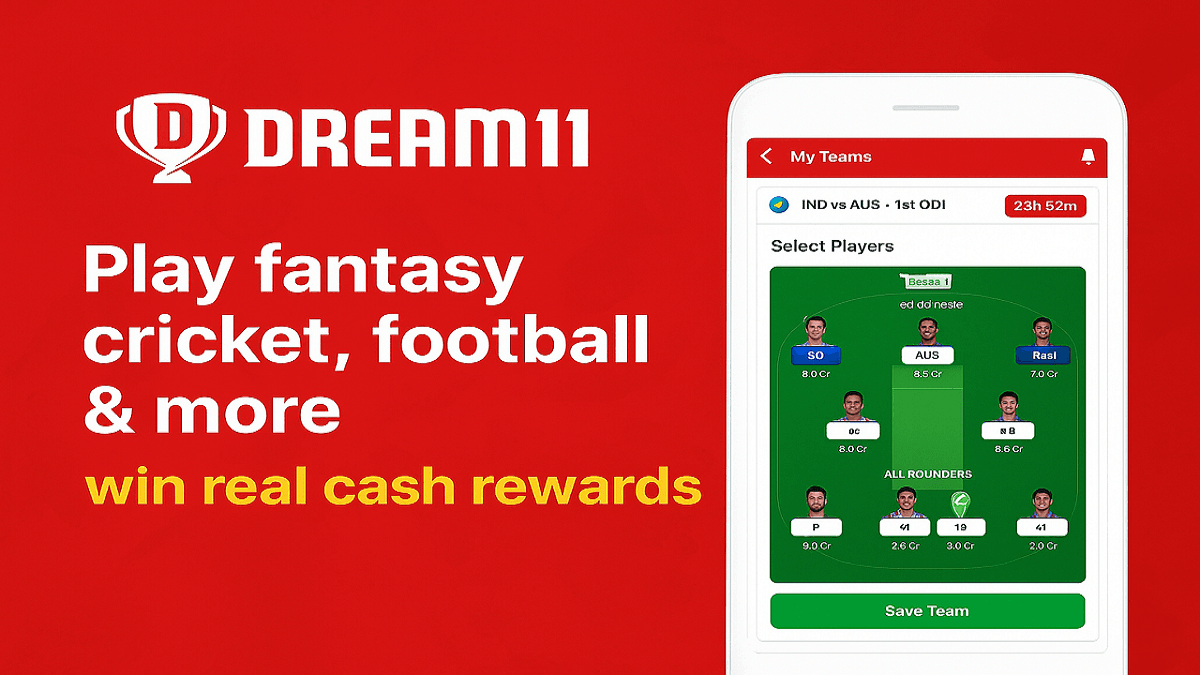
Dream11 Ban Faces Amid India’s New Online Gaming Bill 2025
In August 2025, the Indian Parliament passed the Promotion and Regulation of Online Gaming Act, 2025, which outrightly bans all real-money online gaming, including fantasy sports platforms like Dream11 ReutersWikipediamint. Under this law, offering, promoting, or facilitating such games is criminalized, with penalties ranging from up to three years in prison and fines up to ₹1 crore for each violation
Dream11—valued at around $8 billion—immediately suspended all paid contests, pivoting instead to a free-to-play model focused on social gaming and other ventures like FanCode, DreamSetGo, and Dream Game Studios The Times of IndiamyKhel. The company assured users that all existing account balances remain safe and are withdrawable
The new law also voids advertising and sponsorship opportunities. In response, Dream11 is reportedly in discussions with the BCCI to terminate its ₹358 crore cricket jersey sponsorship, as continued promotion may breach the law
This legislation threatens to reshape India’s booming fantasy gaming sector—raising concerns over significant job losses, investment withdrawals, and diminished consumer engagement
Dream11: The Complete Guide to India’s Biggest Fantasy Sports Platform
Over the past decade, fantasy sports have taken the world by storm. In India, one name dominates this space—Dream11. With over 200 million users (as of 2025), Dream11 has transformed how sports enthusiasts engage with cricket, football, basketball, and other games. Instead of just watching matches, fans now get to test their knowledge, build virtual teams, and win real cash rewards.
Dream11 has not only revolutionized online gaming in India but has also become a global case study for how fantasy sports can blend entertainment, competition, and money-making opportunities. In this article, we’ll explore Dream11 in detail, from its beginnings to how you can maximize your chances of winning.
What the Law Says
The Online Gaming Bill 2025 prohibits any platform that allows users to wager money on online games, regardless of whether the game is skill-based or chance-based. The bill introduces strict penalties:
-
Fines up to ₹1 crore for companies running money-based contests.
-
Imprisonment of up to 3 years for violations.
-
Immediate shutdowns of apps and websites found in violation.
This blanket ban effectively overrides earlier judicial rulings where the Supreme Court and multiple High Courts had upheld fantasy sports like Dream11 as “games of skill”, making them legal in most states.
Dream11’s Response
Dream11, India’s largest fantasy sports platform valued at around $8 billion, was among the first to react. The company immediately announced that it would:
-
Dream11 ban Suspend all real-money contests across cricket, football, basketball, and other sports.
-
Transition to a free-to-play social gaming model, where users can still create fantasy teams but without cash stakes.
-
Focus on its diversified portfolio, including:
-
FanCode (sports streaming platform)
-
DreamSetGo (sports travel and experiences)
-
Dream Game Studios (casual and mobile games).
-
Dream11 also reassured users that all existing wallet balances remain safe and can be withdrawn without restrictions.
Sponsorship Fallout
The new bill doesn’t just impact fantasy contests—it also affects sponsorship and advertising. Under the Act, companies promoting money-based online games could face penalties.
Dream11, which signed a ₹358 crore jersey sponsorship deal with the BCCI for the Indian cricket team, is now in talks to terminate the agreement. The company is also reviewing partnerships with IPL franchises, PKL teams, and other sporting entities. This could leave a significant vacuum in Indian cricket sponsorship revenue.
Industry-Wide Impact
The ban has sent shockwaves across the gaming sector:
-
India’s fantasy sports industry, valued at ₹28,000 crore in 2024, faces an uncertain future.
-
Industry associations warn of ₹20,000 crore in potential tax losses for the government.
-
Startups, investors, and sports leagues reliant on fantasy sports sponsorships may face massive losses.
-
Tens of thousands of jobs linked to operations, marketing, and support functions are at risk.
Reactions and Debate
-
Gaming Industry: Major stakeholders have written to the government urging reconsideration, calling the ban a “blanket approach” that ignores the distinction between games of skill and chance.
-
Lawmakers: Supporters of the bill argue that it was necessary to curb addiction, financial exploitation, and gambling-like behavior among young users.
-
Sports Fans: Millions of fantasy players expressed disappointment, with many calling for regulation instead of prohibition.
The Future of Fantasy Sports in India
While Dream11 has pivoted to free-to-play gaming, questions remain:
-
Will the government consider future amendments to allow regulated, skill-based fantasy sports?
-
Will companies like Dream11 explore international expansion, targeting markets in Southeast Asia, the Middle East, and Africa?
-
Could esports and casual gaming rise as alternative growth engines in India’s digital gaming space?
What is Dream11?
Dream11 is a fantasy sports platform that allows users to create virtual teams using real-life players. The performance of your team depends on how those players perform in real matches.
For example: If you’re playing cricket fantasy on Dream11, you’ll choose 11 players from two competing teams. If your chosen players score runs, take wickets, or contribute in the real match, you earn points. At the end, users with the highest points win cash prizes.
History and Growth of Dream11
Dream11 was founded in 2008 by Harsh Jain and Bhavit Sheth. At the time, fantasy sports was still a new concept in India. Initially, Dream11 struggled to attract users, as internet penetration and digital payments were limited.
However, with the rise of smartphones, affordable data, and increasing interest in cricket, Dream11 found its golden opportunity. By 2012, it introduced the freemium model—allowing free and paid contests.
Milestones of Dream11:
-
2017: Reached 2 million users.
-
2019: Became India’s first gaming unicorn (valuation $1B+).
-
2020: Official partner of IPL.
-
2021–2025: Expanded to 200+ million users across India.
Dream11’s rise is closely linked with the popularity of IPL and India’s cricket-crazy audience. Today, it is the market leader in fantasy sports, competing with My11Circle, MPL, and Gamezy.
Why Dream11 Became Popular
Several reasons explain Dream11’s success:
-
Cricket-crazy audience: India loves cricket, and IPL provided perfect timing.
-
Affordable entry fees: Anyone can start with as little as ₹10.
-
Opportunity to win big: Mega contests offer lakhs in winnings.
-
User-friendly app: Simple, fast, and secure.
-
Celebrity endorsements: MS Dhoni, Rohit Sharma, Hardik Pandya, etc.
Dream11 Success Stories
Many ordinary users have won life-changing amounts.
-
Example 1: A student from Rajasthan won ₹25 lakh in an IPL mega contest.
-
Example 2: A cab driver from Delhi won ₹1 crore by choosing the right Captain.
-
Example 3: Small businesses have grown thanks to Dream11 winnings.
These stories highlight that with research and smart strategy, real people can achieve big wins.
❌ Cons
-
Addictive—risk of overspending.
-
Winning big in mega contests is tough.
-
Subject to state restrictions (not available in Assam, Odisha, Telangana, Nagaland, Sikkim, Andhra Pradesh).
Dream11: Before vs. After the 2025 Online Gaming Ban
| Aspect | Before Ban (Till mid-2025) | After Ban (Post Online Gaming Bill 2025) |
|---|---|---|
| Business Model | Real-money fantasy sports contests across cricket, football, kabaddi, basketball & more | Shift to free-to-play social gaming, focus on FanCode, DreamSetGo & Dream Game Studios |
| User Base Engagement | Over 200 million active users, with millions playing paid contests daily | Users limited to free fantasy contests, engagement shifting to casual gaming & content |
| Revenue | Estimated ₹5,000–₹6,000 crore annually from paid contests & sponsorships | Revenue hit drastically; only non-cash models & allied businesses generating income |
| Sponsorships | Jersey sponsor of Indian cricket team (₹358 crore deal), IPL/PKL tie-ups | Exiting high-value sponsorships to avoid legal risk under new bill |
| Government Stance | Previously recognized as “game of skill” by Supreme Court & many High Courts | Classified under “banned real-money online games” with criminal liability |
| Employment Impact | Thousands employed directly & indirectly in fantasy sports ecosystem | Risk of massive layoffs; industry bodies warn of ₹20,000 crore tax loss |
| Future Outlook | Expanding fantasy sports, growing into global markets | Pivoting to esports, free gaming, sports tech, and international ventures |